

Method for Determining the Number of Available Credits for California Red-Legged Frog Conservation Banks
Fish and Wildlife ServiceThe California red-legged frog is the largest native frog in the western United States. It is endemic to California and Baja California, Mexico. It is typically found from sea level to elevations of approximately 1,500 meters (5,000 feet). The California red-legged frog ranges in length from 1.5 to 5.4 inches, with females attaining a significantly […]
Biodiversity Offsets: A Proposition Paper
International Council on Mining and MetalsICMM and its member companies wish to understand more about the concept of biodiversity offsets and the practicalities of their application to consider how they could contribute to a suite of measures to improve environmental performance.
Market-Based Environmental Policies: What Can We Learn from U.S. Experience and Related Research?
Robert StavinsEver since the passage of the 1990 amendments to the US Clean Air act and the creation of a market in sulfur dioxide (SO2), it has become clear that market mechanisms can be effectively used to achieve environmental policies. But markets are neither infallible nor automatic. They have blind spots and they need to be […]
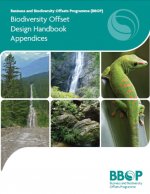
Biodiversity Offset Design Handbook Appendicies – 2009
BBOPThis companion volume of Appendices to the BBOP Offset Design Handbook offers readers a summary of a sample of methodologies relevant to biodiversity offsets and some references on them for further reading. Some approaches are required or recommended by government policies; some are the subject of the lending requirements of banks; some are still under […]
Technical conditions for positive outcomes from biodiversity offsets
An input paper for the IUCN Technical Study Group on Biodiversity Offsets
John Pilgrim, Jonathan Ekstrom - The Biodiversity Consultancy, The Biodiversity ConsultancyWe assess the conditions under which biodiversity offsets benefit biodiversity and achieve no net loss, asking two key questions: i. Under what conditions do biodiversity offset approaches provide positive outcomes for biodiversity, irrespective of the concept of no net loss? ii. Under what conditions is it possible to achieve no net loss through the implementation […]
Balancing Biodiversity: A Global Instrument for Meeting the 2010 Biodiversity Target
Annah L. Peterson , Chloe Hill, Louise A. GallagherRadically heightened extinction rates over the past 50 years have prompted the Convention on Biological Diversity to adopt the 2010 biodiversity target, which aims to significantly reduce global biodiversity loss by 2010. Despite the establishment of this ambitious goal, few policies have proven to be able to ensure its achievement. This paper explores the potential […]
Native Vegetation Act 1991
Government of AustraliaAn Act to provide incentives and assistance to landowners in relation to the preservation and enhancement of native vegetation; to control the clearance of native vegetation; and for other purposes.

Council Directive 92/43/EEC of 21 May 1992 on the Conservation of Natural Habitats of Wild Fauna and Flora: Annex I
European UnionGuidance on the interpretation of habitat types is given in the “Interpretation Manual of European Union Habitats” as approved by the committee set up under Article 20 (“Habitats Committee”) and published by the European Commission.
Physical Stream Assessment: A Review of Selected Protocols for Use in the Clean Water Act Section 404 Program
Government of the United StatesWe reviewed stream assessment and mitigation protocols collected from throughout the United States in an effort to identify attributes most pertinent to the Clean Water Act (CWA) Section 404 regulatory program. We also solicited input from practitioners utilizing stream assessment protocols nationwide in an effort to identify common attributes of existing protocols and to seek […]
Scoping Study for the Design and Use of Biodiversity Offsets in an English Context
Final Report to Defra
Treweek et al. 2009In 2007, the UKs Department for Environment, Food and Rural Affairs (Defra) identified the need to explore new policy options, including market creation in biodiversity or incentives for biodiversity such as biodiversity offsets, particularly to reduce rates of loss of non-designated sites and features. In 2008, Defra commissioned a scoping study for the design and […]